|
|
|
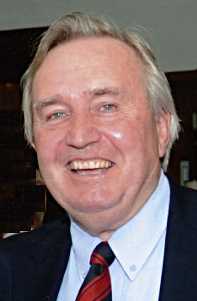
Denis Weaire
Professor Emeritus
|
Professional experience
(1968) PhD, Physics, University of Cambridge
(1967-1969) Fellow of Clare College
(1969-1970) Research Fellow, Harvard University
(1970-1972) J W Gibbs Instructor/Associate Professor, Yale University
(1974-1977) Senior Lecturer/Professor, Heriot-Watt University
(1980-1984) Chair of Experimental Physics, University College, Dublin, Ireland
(1983-1984) Head of Experimental Physics Department, University College, Dublin, Ireland
(1984) Erasmus Smith's Professor of Natural and Experimental Philosophy, Trinity College Dublin, Ireland;
(1984-1999, 2003-2005) Head of Natural and Experimental Philosophy Department, Trinity College Dublin, Ireland
(2005) Professor Emeritus, Trinity College Dublin, Ireland
Research
Condensed matter physics, materials science, computational physics, soft matter
Early work in Cambridge was in pseudopotential theory applied to metals: it resulted in an influential review article, but preceded the major expansion of that subject, in terms of local density approximations. At Harvard I was attracted to two themes in disordered materials: amorphous metals and amorphous silicon. The latter was to absorb my interest for many years, in the proof of theorems and computations that had to do with electronic and vibrational properties. The foremost of these rigorously established the existence of a band gap for an idealised ("Weaire-Thorpe") Hamiltonian, regardless of disorder, which was an important step in understanding a-Si. I also became interested in the process of building random network models for this material. Much later, I was to develop with others the WWW model, based on an algorithm of my own conception. This has been greatly used and highly cited ever since. Quite early in my career I recognised that foam structures, particularly in two dimensions, presented an opportunity for this kind of research, in tune with the growing interest in complex, disordered materials. This grew into a research programme that has by now excluded all else, and is partly encapsulated in the book Physics of Foams, now a standard reference. In 1984 we organised in Ireland the first of a series of conferences on the physics of foams, of which the latest was held in France this year, Attracting 200 participants. Starting at Yale, then at UCD and TCD, this research has produced many key results such as: the Aboav-Weaire Law for statistical correlations in cellular structures the first realistic computer simulation of a dry 2d foam the first realistic simulation for a wet foam the first account of the variation of elastic properties of a 2d foam with liquid fraction, based on simulation the discovery of many ordered cylindrical foam structures the discovery and theoretical analysis of a solitary wave in foam drainage the discovery of convective instability in foam drainage recently, the discovery of a remarkable new form of meandering rivulet instability However the most prominent outcome of our work at TCD was the Weaire-Phelan structure, the minimum energy structure (as far as we know) of a foam of equal-sized bubbles in three dimensions. This overthrew a century-old conjecture of Lord Kelvin (as recounted in The Kelvin Problem), and it attracted worldwide recognition. One of the main buildings for the Beijing Olympics is being constructed in the form of a framework explicitly based on this structure - the Water Cube. The mathematical questions surrounding foam structures are intriguing. I was invited to be the primary coordinator of a summer programme at the Isaac Newton Institute in Cambridge in 2002, to which leading mathematicians came to discuss these topics intensively for one month. However this is not really characteristic of our general style of research, which combines theory, computation and simple experiments in the pursuit of many different physical properties and even their applications. Today most of these topics belong in some sense to fluid dynamics
History of physics
This research line is continuing with some addition of themes from the history of science, which build upon longstanding interests
Awards
Major Open Scholarship, Clare College, Cambridge (1961)
Harkness Fellowship, Commonwealth Fund, New York (1964-1966)
Fellow of Clare College (1967-1969)
Research Fellow, Harvard University (1969-1970)
Fellow of Trinity College Dublin (1987)
Member of Royal Irish Academy (1997)
Elected Fellow of the Royal Society (1998)
Fellow of the Royal Society (1998)
Cecil Powell Memorial Medal and Lecture, European Physical Society
Holweck Medal
Cunningham Medal (2005)
Larmor Lecture, Queens University Belfast
Award for Outstanding Paper, Japanese Society for Science on Form
President, European Physical Society
Vice-President, Academia Europaea
Vice-President, Institute of Physics
Publications:
A. Irannezhad, A. Baragry, D. Weaire, A. Mughal, S. Hutzler, Packing soft spheres: experimental demonstrations with hydrogels, European Journal of Physics (44) p. 065501 (2023)
A. Mughal, S. Hutzler, D. Weaire, Coulomb Calligraphy, Forma (38) p. 1-5 (2023)
A. Mughal, J. Winkelmann, D. Weaire, S. Hutzler, Stability maps for columnar structures, Philosophical Magazine (103) 1–17 (2023)
S. Hutzler, J. Ryan-Purcell, A. Mughal and D. Weaire, A continuum description of the buckling of a line of spheres in a transverse harmonic confining potential, Royal Society Open Science, 10 (7) p. 230-293 (2023)
A. Mughal, J. Winkelmann, D. Weaire, S. Hutzler, Stability maps for columnar structures, Philosophical Magazine, 103 (14) p. 1328-1344 (2023)
A. Mughal, S. Hutzler, D. Weaire, Equilibrium states of confined ions in two dimensions, Philos. Mag. (103) 595–609 (2023)
D. Weaire, From bombs to bubbles: the extraordinary career of Cyril Stanley Smith, Institute of Physics History of Physics Group (2023) p 33-35
D. Weaire, A. Mughal, J. Ryan-Purcell, S. Hutzler, Description of the buckling of a chain of hard spheres in terms of Jacobi functions, Physica D (433) 133-177 (2022)
A. Irannezhad, D. Weaire, A. Mughal, J. Ryan-Purcell, S. Hutzler, Buckling of a tilted line of confined hard spheres, Philos. Mag. (102) 2506–2524 (2022)
A. Mughal, D. Weaire, S. Hutzler, PeierlsNabarro potential for a confined chain of hard spheres under compression. Europhys. Lett. (135) 26002 (2021)
S. Hutzler, A. Mughal, J. Ryan-Purcell, A. Irannezhad, D. Weaire, Buckling of a linear chain of hard spheres in a harmonic confining potential: Numerical and analytical results for low and high compression, Phys. Rev. E (102) 022905 (2020)
D. Weaire, A. Irannezhad, A. Mughal, S. Hutzler, A simple experimental system to illustrate the nonlinear properties of a linear chain under compression. Am. J. Phys. 88, 347–352 (2020)
J. Winkelmann, A. Mughal, D. Weaire, S. Hutzler, Equilibrium configurations of hard spheres in a cylindrical harmonic potential, Europhys. Lett. (127) 44002 (2019)
A. Mughal, J. Winkelmann, D. Weaire, S. Hutzler, Columnar structures of soft spheres Metastability and hysteresis, Phys. Rev. E (98) 043303 (2018)
J. Winkelmann, B. Haffner, D. Weaire, A. Mughal, S. Hutzler, Simulation and observation of line-slip structures in columnar structures of soft spheres Phys. Rev. E (97) 059902 (2017)

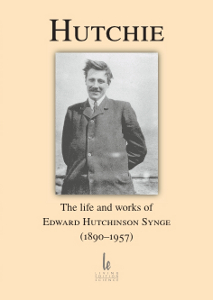
J. F. Donegan, D. Weaire, P. Florides (Editors),
Hutchie, The Life and Works of Edward Hutchinson Synge (1890–1957), Living Edition (2012)
A. Mughal, H. Chan, D. Weaire, S. Hutzler, Dense packings of spheres in cylinders simulations, Phys. Rev. E (85) 051305 (2012)
D. Weaire (Editors), George Francis Fitzgerald, Living Edition (2009)
D. Weaire, Kelvin's ideal foam structure, Journal of Physics: Conference Series (158) 012005 (2009)
D. Weaire, Kelvin and Fitzgerald: great Irish physicists, In: R. Flood, M. McCartney, A. Whitaker (Eds), Kelvin: Life, Labours and Legacy (2008) p. 86-93
D. Weaire, Kelvin’s foam structure: a commentary, Philosophical Magazine Letters (88) 91-102 (2008)
D. Weaire, T. Aste, The Pursuit of Perfect Packing, 2nd edn, CRC Press (2008)
D. Weaire, S. Hutzler, The physics of foam, Clarendon Press (1999) 264 p
D. Weaire, A short history of packing problems, FORMA-TOKYO (14) 279–285 (1999)
D. Weaire, The Kelvin Problem. Foam Structures of Minimal Surface Area, Taylor & Francis (1996) 175 p
D. Weaire, R. Phelan, A counter-example to Kelvin's conjecture on minimal surfaces, Philosophical Magazine Letters, 69 (2) 107–110 (1994)
D. Weaire, R. Phelan, The structure of monodisperse foam, Philosophical Magazine Letters (70) 345-350 (1994)
References
Personal website
Professor Denis Weaire, Trinity Research, Dublin
Created: 17 February 2017
Updated: 17 June 2025
Web
| |